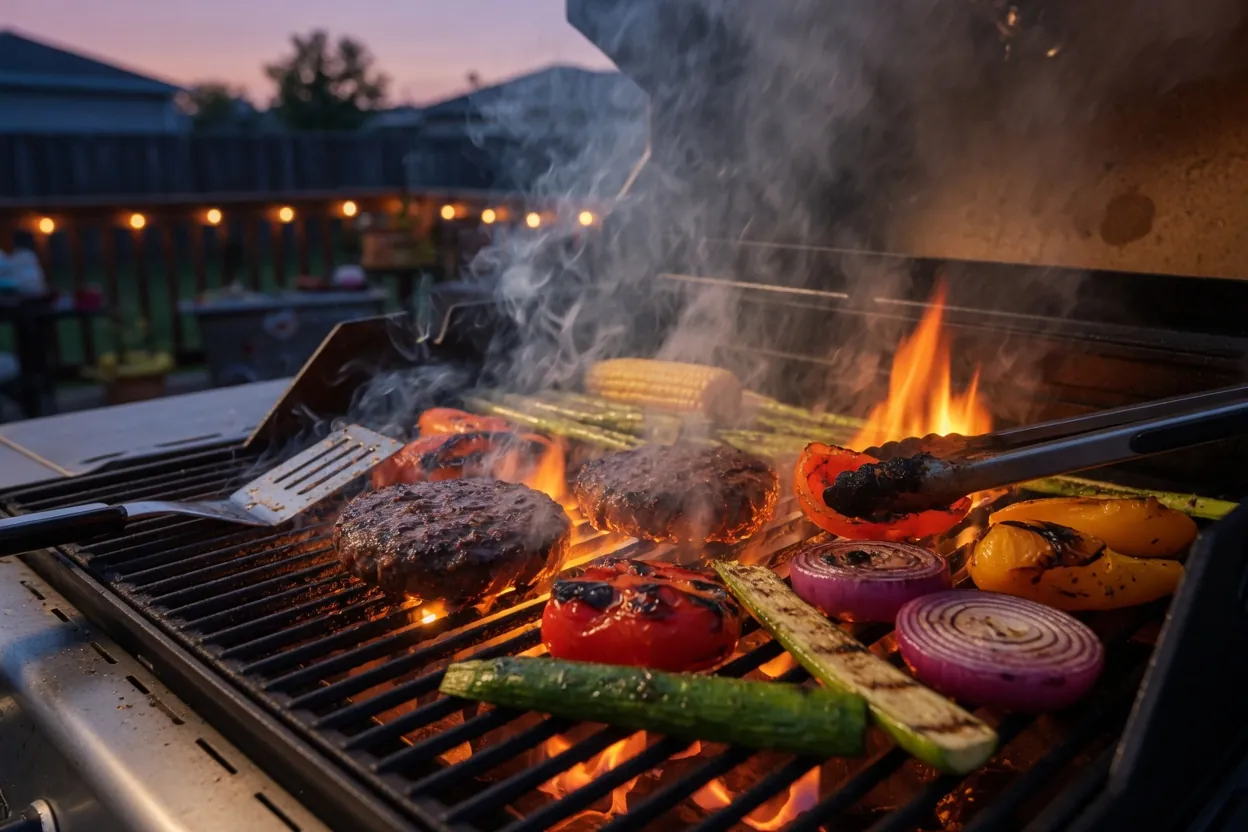
The only reliable way to know when meat is done grilling is to check its internal temperature with an instant-read thermometer. The touch test, the color of the juices, the poke-and-hope method—those are backup skills worth having, but temperature is what you can actually trust. Cutting into a steak on the grill to "check" it is the fastest way to wreck it, and I'll explain why below.
If you've ever served rubbery chicken or a $40 ribeye cooked to gray, this article is for you.
Why Temperature Beats Every Other Method
Your grandfather never owned a thermometer and his burgers were fine—I've heard it too. But timing charts fail constantly. A chicken breast's cook time shifts with its thickness, your grill's heat, the wind, and whether the meat went on straight from the fridge or sat out on the counter first.
Cook to internal temperature, not to the clock. NYT Cooking puts it plainly: there are "myriad folk tales" about telling doneness, but the sure-fire way is a digital instant-read thermometer (NYT Cooking).
Chicken is where this really counts. The old "clear juices, no pink" rules aren't reliable enough to guarantee safety—chicken is safe when a thermometer reads 165°F (eathealthy365). Color lies. Temperature doesn't.
Want a quick check on your setup or doneness targets before you fire up? The Grill Check tool walks you through target temps by cut.
Safe Internal Temperatures: The Chart to Bookmark
The food-safety numbers aren't a matter of opinion. These are the USDA's safe minimum internal temperatures, measured with a food thermometer before you pull the food off the heat (USDA FSIS).
| Food | Safe Minimum Internal Temp | Rest Time |
|---|---|---|
| Beef, pork, veal, lamb (steaks, chops, roasts) | 145°F (62.8°C) | At least 3 minutes |
| Ground meats (burgers) | 160°F (71.1°C) | None required |
| Ground poultry | 165°F | None required |
| All poultry (breasts, whole bird, legs) | 165°F | None required |
| Fresh or smoked ham (uncooked) | 145°F (62.8°C) | At least 3 minutes |
Two things worth calling out. Ground beef needs a higher temp than whole steak—160°F versus 145°F—because grinding spreads surface bacteria all the way through the patty. That's why you can't cook a burger to medium-rare as safely as a steak. Different rules for different meat.
Chicken hits 165°F everywhere, measured in the thickest part away from the bone. No exceptions.
A Note on Steak Doneness Preferences
For whole muscle cuts like a ribeye, plenty of steak cooks go below 145°F on purpose, and food scientists generally consider that safe because searing destroys surface pathogens (steakrecipe.org). That's your call. The USDA number is the safe floor; where you land above or below it for a whole steak comes down to preference. Just know the difference between the two situations.
Steak Doneness by the Numbers
Steak is all about hitting your target number. Rare is 120°F, medium is 140°F, well-done is 160°F (NYT Cooking). Most people are chasing medium-rare, which lands around 130–135°F final.
The part everyone forgets: you don't pull the steak at your target temp. You pull it below it. I'll cover why in the resting section, but that single habit is the biggest thing separating a great steak from a disappointing one.
Cuts have their own sweet spots. A ribeye is best at medium-rare, finishing around 130–135°F, while a lean filet mignon does better pulled at the lower end, 125–135°F, to hold onto its moisture (44steaks.com). Lean cuts punish overcooking harder, so watch those closely.
The Touch Test (Your Backup When You Don't Have a Thermometer)
Sometimes the thermometer's in the kitchen and both your hands are on the tongs. The touch test earns its keep here, and it's the trick that tends to amaze people in cooking classes (Jill Silverman Hough). You compare the firmness of the meat to the fleshy pad below your thumb.
Try it with your non-dominant hand:
- Rare — Touch thumb to index finger. Poke the pad below your thumb. Soft and squishy, with a little firmness about half an inch deep.
- Medium-rare — Thumb to middle finger. Firmer.
- Medium — Thumb to ring finger. Firmer still.
- Well-done — Thumb to pinky. Very firm (The MeatStick).
The caveat: it varies from hand to hand, and once your meat is thicker than about 1½ inches, the method breaks down—use the thermometer (Jill Silverman Hough). Treat touch as a double-check, not the final word. It takes practice, and you'll overcook a steak or two while you learn it.
Visual cues help as well. When the juices on the surface start running clear rather than red, the meat is moving from medium toward well-done (The MeatStick). Don't lean on that alone, especially with chicken.
Why Cutting Into It Early Ruins It
This one bugs me because I see it constantly. Someone slices a steak open on the grill to see if it's done, and all the juices they spent twenty minutes building up run out onto the coals. Now the meat is drier and more likely to overcook.
Leaving it whole keeps the juices inside until the meat has had a chance to rest (Jill Silverman Hough). A thermometer gives you the same information through one tiny hole instead of a gaping cut. Insert it midway into the thickest part, avoiding bone and gristle, and for larger cuts take a few readings in different spots (BBQGuys).
Probe it, don't butcher it.
Resting and Carryover Cooking (The Step Everyone Skips)
If you take one thing from this article besides "buy a thermometer," take this: meat keeps cooking after it leaves the grill. It's called carryover cooking, and not accounting for it is why people overshoot doneness so often.
Carryover can add anywhere from 3°F to 10°F depending on thickness and how you rest the meat (steakrecipe.org). So for a final 135°F medium-rare, pull the steak at around 125–130°F. BBQGuys suggests removing steaks and burgers about 5 degrees below target, and roasts 5–10 degrees below (BBQGuys).
Then let it rest. A steak needs at least 5 minutes tented loosely with foil so the juices redistribute instead of flooding your cutting board (Allen Brothers). Chicken benefits from a few minutes too (WebstaurantStore). And remember the USDA rest requirement—3 minutes minimum for whole beef, pork, veal, and lamb (USDA FSIS).
Know your cut, set your target, hit the pull temperature, rest it. That's the whole formula. Grab a thermometer, pull your meat a few degrees early, and give it those few minutes before you slice, and you'll cook everything from burgers to ribeye better than any timer ever managed. Still deciding what to throw on the grill tonight? What's for Dinner has ideas—then come back here to nail the doneness.
Frequently Asked Questions
Is my chicken done at 165°F even if there's a little pink?
Yes. If a thermometer reads 165°F in the thickest part away from the bone, the chicken is safe—color isn't a reliable indicator (eathealthy365). Fully cooked chicken can stay slightly pink near the bone thanks to natural pigments, so trust the temperature over the tint.
What temperature should I pull my steak off the grill for medium-rare?
Pull it around 125–130°F if you want a final temperature of about 135°F, since carryover cooking keeps raising the temp as it rests (steakrecipe.org). Removing steaks roughly 5 degrees below your target is the general rule (BBQGuys).
Can I cook a burger to medium-rare like a steak?
Not safely. Ground meats need 160°F because grinding spreads surface bacteria throughout the patty, unlike a whole steak where the bacteria stay on the exterior (USDA FSIS). Whole steaks have a lower safe minimum of 145°F for that reason.
Do I really need a meat thermometer, or is the touch test enough?
The touch test is a useful backup, but it varies from person to person and fails on meat thicker than about 1½ inches (Jill Silverman Hough). For consistent, safe results—especially with chicken—an instant-read thermometer is the only method I'd fully trust.
How long should I rest my steak after grilling?
At least 5 minutes, loosely tented with foil, so the juices redistribute instead of spilling out when you cut (Allen Brothers). For whole beef, pork, veal, and lamb, the USDA also calls for a minimum 3-minute rest for food safety (USDA FSIS).