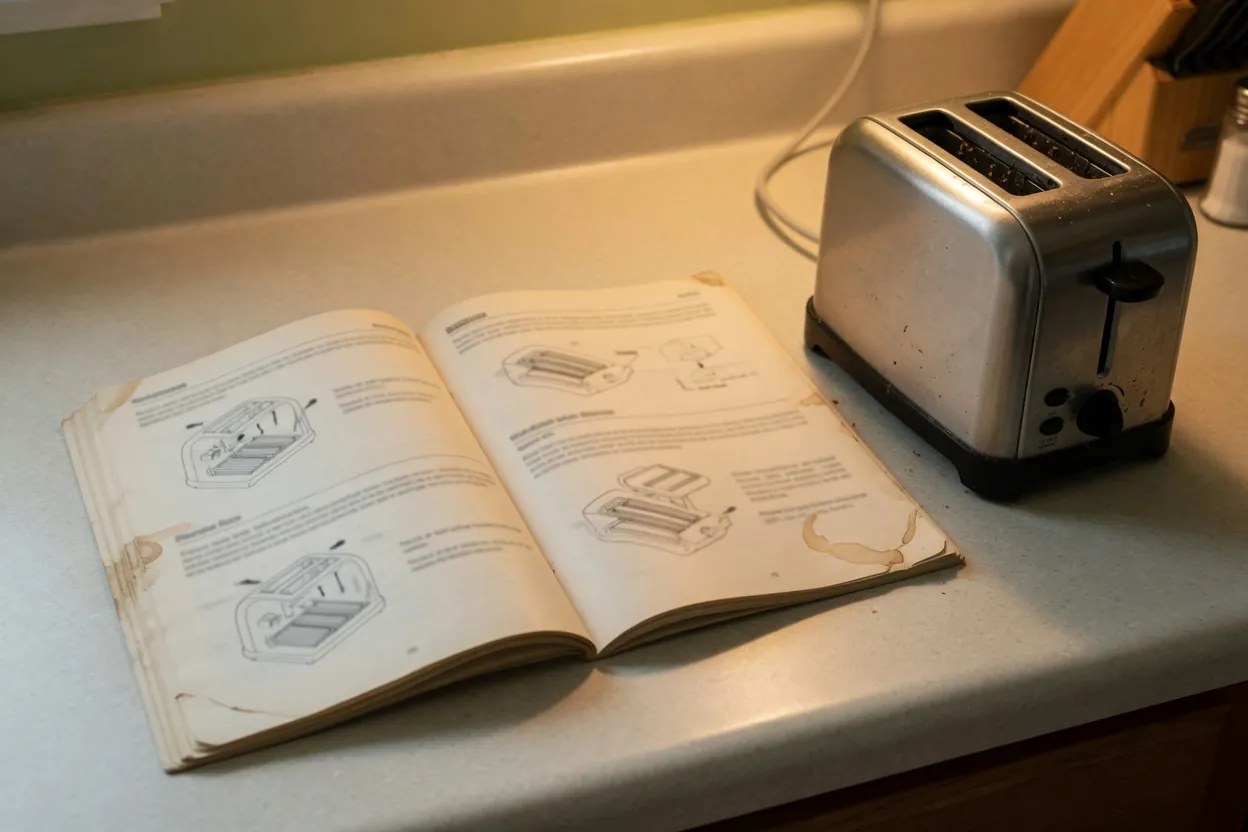
The fastest fix when you're stuck with instructions in another language or a manual so dense it might as well be another language: take a clear photo or copy the text, run it through a translation-and-plain-language tool, then rebuild it as short numbered steps in your own words. The rest of this article covers how to do each part well, because the gap between "translated" and "actually understandable" is wider than most people expect.
We've all met that flat-pack dresser in pieces on the floor, a diagram with no words, and step 4 pointing at a screw that doesn't seem to exist anywhere in the box. Or a new gadget printed with a manual in six languages, none of them helpful.
Why "Translated" and "Understandable" Aren't the Same Thing
Most advice on this topic jumps straight to "just translate it." A word-for-word translation of a badly written manual gives you a badly written manual in your language. The confusion doesn't come from the language alone. It comes from jargon, passive voice, and steps written by an engineer who forgot you weren't standing next to them.
Plain language is a discipline, not a preference. The U.S. government legislates it: the Plain Writing Act of 2010 requires federal agencies to write for their audience, according to Digital.gov. And readers want it. The UK's Office for National Statistics reports that 80% of people prefer sentences written in plain language, expert readers included.
Decoding instructions is really two jobs, then. Get it into your language, and get it into plain language. Skip the second and you'll still be stuck on the page.
The Fast Path: Translate the Manual First
If the instructions are in a foreign language, start there. Snap a photo or paste the text into a tool that handles both the language and the layout. A dedicated manual translator tool is built for this. It keeps the structure of a manual intact instead of collapsing a whole page into one jumbled paragraph, which is what a generic translator tends to do.
Three things make translation go smoother:
- Translate in small chunks. One section at a time. Whole-document dumps scramble the step order.
- Watch the numbers. Torque values, measurements, temperatures, and part numbers should carry over exactly. If a number looks off, re-check it.
- Keep the original nearby. When something reads strangely, compare it against the source. Diagrams often clarify what words can't.
Machine translation has real limits with technical material. A 2026 guide to technical manual translation notes that errors love to hide "in a torque value, a maintenance interval, a safety warning," which are the exact spots where being wrong actually hurts. For furniture, fine. For anything involving electricity, gas, medication, or load-bearing anything, treat the output as a draft and verify the critical details.
Rewrite It Into Plain English You Can Actually Follow
Got the words in your language but still confused? This is the step almost everyone skips. Now you rewrite, or have a tool rewrite, the mush into short, direct steps.
The principles aren't secret, and there's evidence they work. A randomized trial on drug self-injection instructions found that people given a plain-language version correctly demonstrated more preparation and injection steps than those given the standard version. Clearer instructions, fewer mistakes, and in that case, fewer people injuring themselves.
The plain-language moves that matter most
- Use active voice. "Tighten the bolt," not "the bolt should be tightened." The Australian government's style manual lists active voice as one of four core plain-language habits.
- Aim low on reading level. Colorado's state IT office writes that plain language is typically pitched at a 6th–8th grade reading level, and that it improves auto-translation accuracy too.
- One step per line. Number them. If a "step" contains three actions, split it into three.
- Cut jargon. Replace special terms with everyday words. If a term has to stay, define it once in plain words right next to it.
- Put the most important thing first. People scan before they read, so lead with what matters.
If you'd rather not do the rewriting by hand, a tech help tool can take dense device instructions and reshape them into plain steps. It works well for gadgets, apps, and settings menus that assume you already know the lingo.
A Quick Decode Checklist
When the instructions make no sense, run through this in order:
| Situation | Do this |
|---|---|
| Instructions in another language | Photo or paste into a manual translator, section by section |
| Translated but still confusing | Rewrite as short, numbered, active-voice steps |
| Diagram-only, no words | Match each part to the diagram; label parts before starting |
| A step references a part you can't find | Check the parts list and count everything first |
| Safety-critical (gas, electric, meds) | Verify every number against the source; get a human expert |
| A step contradicts what you see | Stop. Re-read the previous step — order is usually the issue |
Print it, screenshot it, whatever works. The goal is to have a next move ready instead of just frustration.
Spot What's Missing, Not Just What's Confusing
Once you've got a plain-English version, don't stop at "do I understand this?" Ask "what's missing here?"
Confusing documents often hide their real meaning in the gaps: the step that skips ahead, the warning that's oddly specific in one spot and vague everywhere else. As one guide on translating confusing documents into plain language puts it, "the gaps are often where the real meaning lives." A manual that carefully explains step 3 but says nothing about step 4? That silence is the warning sign.
For furniture and gadgets, missing info usually means a step got compressed or a part is assumed. For contracts, warranties, or anything you're signing, the gaps are where you ask questions before you commit. Different stakes, same instinct.
When to Stop and Get a Human
Tools are useful, and worth using. But there's a line. If the instructions cover installation, maintenance, safe operation, or anything with legal or safety weight, don't rely on a machine draft alone.
The technical translation guide from earlier puts it bluntly: if a translated manual "changes how a technician installs, tests, repairs, or documents the product, it is not ready for release" without expert sign-off. You're not a technician assembling a bookshelf, but the principle scales down. Electrician work, gas appliances, prescription instructions, child car seats? Get a qualified person to confirm. A clear plain-English draft is a good starting point for that conversation, not a replacement for it.
For the everyday stuff — the dresser, the router, the coffee machine that won't stop blinking — translate it, rewrite it into plain steps, and check for gaps. That covers the vast majority of "what on earth does this mean" moments. Start with the manual translator if it's a language problem, or the tech help tool if it's a jargon problem, and turn the mess on your floor into something you can follow.
Frequently Asked Questions
What should I do if my instructions are in another language?
Photo or paste the text into a dedicated manual translator, working one section at a time so the step order stays intact. Then rewrite the result as short, numbered steps in plain English, and double-check any numbers or measurements against the original.
Why is a translated manual still hard to understand?
Translation only swaps the language. It doesn't fix jargon, passive voice, or poor structure. That's why the rewriting step matters: plain-language versions measurably improve comprehension, which is why governments and even a medical trial on instructions back the approach.
Can I trust machine translation for a technical manual?
For low-stakes items like furniture, usually yes, and you can treat it as a solid draft. For anything safety- or compliance-related, verify critical details against the source, since errors tend to hide in torque values and safety warnings, and get a qualified person to confirm.
What reading level should plain-English instructions aim for?
Aim for roughly a 6th–8th grade reading level, the standard target for plain language in the U.S.. Short sentences, active voice, one action per step, and everyday words get you there.
How do I handle a diagram-only manual with no words?
Lay out and identify every part first, then match each one to the diagram before you build. If a step references a part you can't find, count everything against the parts list. A missing or miscounted piece is the usual culprit.