The quickest reliable way to estimate an old item's value is to identify it precisely, record its condition, and compare it with recent sales of genuinely similar items. Do not start with a hopeful asking price, a family story, or a single photo estimate. Those can supply clues, but the market evidence comes from completed sales.
You can do that first pass yourself. A formal appraisal becomes useful when the answer will affect insurance, taxes, an estate, a legal decision, or the sale of something that may be unusually valuable.
1. Photograph the item before you clean or repair it
Start by making a record of what you actually have. Take clear photos of:
- the front, back, base, and sides;
- maker's marks, labels, signatures, serial numbers, and date codes;
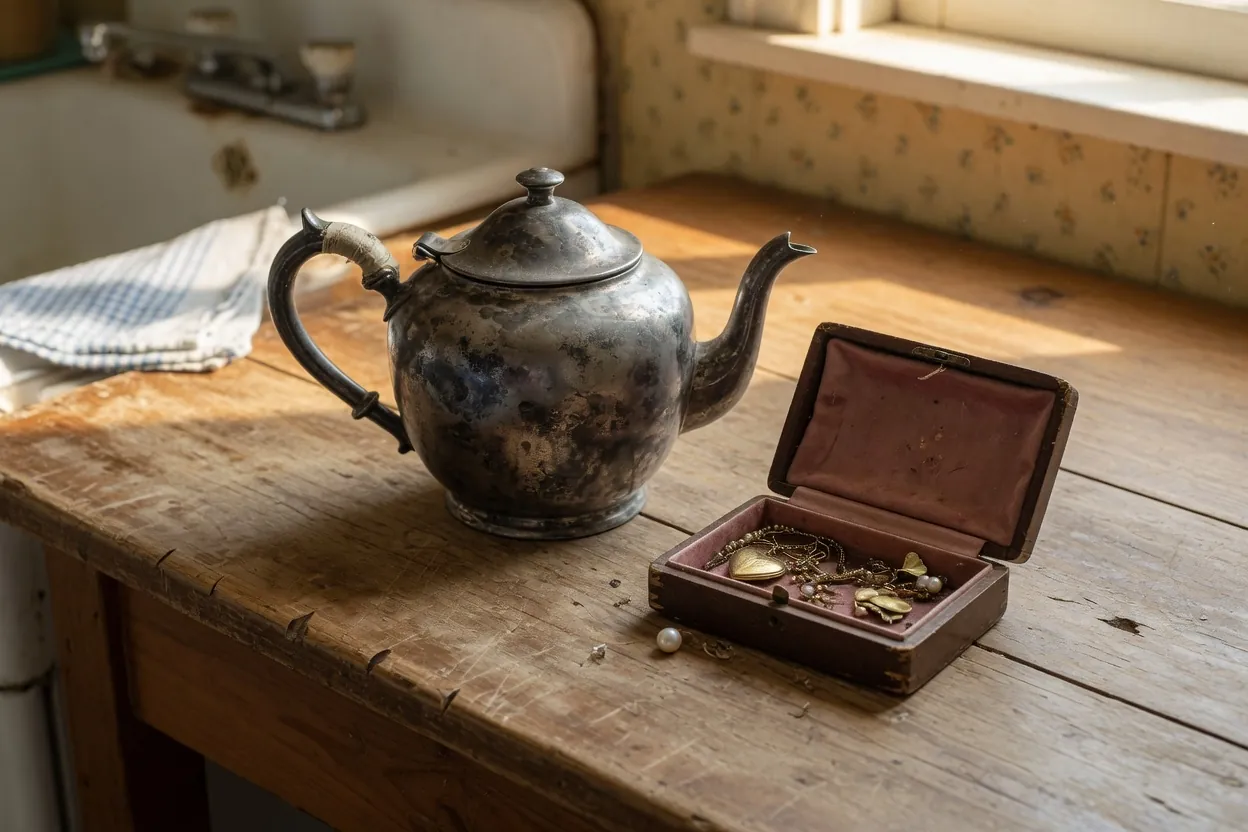
- chips, cracks, stains, wear, repairs, and missing parts;
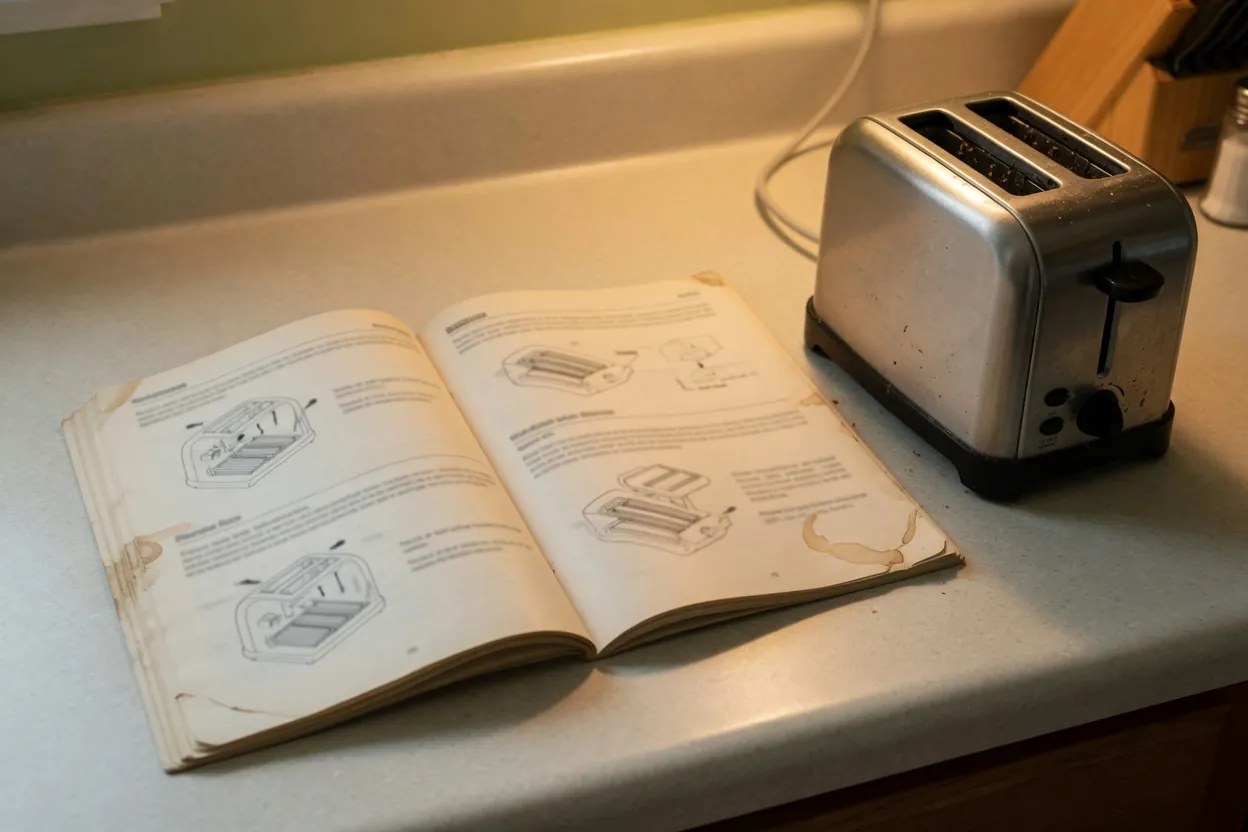
- boxes, manuals, receipts, certificates, and other accessories; and
- a ruler or familiar object beside it when scale is not obvious.
Do this before polishing metal, removing a label, gluing a break, refinishing wood, washing fabric, or trying to make a moving part work. The U.S. National Archives' artifact-care guidance warns that cleaning or repairing an unidentified object can remove evidence and cause damage. It specifically advises documenting deterioration with photographs and not polishing metal artifacts or gluing broken pieces.
That is museum guidance, so an ordinary yard-sale lamp does not need museum handling. The useful rule is simpler: if you do not yet know what an old object is, preserve its current state long enough to identify it.
2. Identify the exact version, not just the category
“Old vase” is too broad for a useful price search. “Eight-inch stoneware vase with an impressed maker's mark” is a workable start.
Write down every fact you can verify from the object itself:
- Maker or brand. Copy marks exactly, including punctuation and unusual letter shapes.
- Model, pattern, or title. Look on the base, back, inside a battery compartment, or beneath a removable part.
- Material and size. Porcelain and pottery, solid wood and veneer, or sterling and silver plate may look similar in a photo but trade in different markets.
- Approximate age. A patent date, copyright line, address, plug type, label design, or serial-number format may narrow the period. Treat a date printed on a design as a clue, not automatic proof of when your copy was made.
- Completeness. A lid, charger, original box, matching piece, or instruction booklet can separate one comparison from another.
An image tool can help you read marks and form search terms. The EasyAI What's It Worth tool can suggest an identity and visible condition notes from a photo. For coins, use the more specific Coin Identifier. Treat either result as a lead to verify: one photograph cannot establish provenance, detect every repair, confirm a material, or authenticate an object.
3. Compare sold items, not ambitious listings
An active listing tells you what a seller hopes to receive. A completed sale is evidence that a buyer and seller reached a price.
eBay's own pricing guide tells sellers to search for similar items and check completed listings. Its Product Research guide says sellers can filter sales data by details such as condition, category, date, and location. Product Research can cover up to three years; ordinary completed-listing results cover a shorter recent window.
Search using the strongest identifiers you found, then build a small comparison set. A few close matches are more informative than a page of vaguely related ones. For every result, check:
| Match this | Why it matters |
|---|---|
| Maker, model, pattern, or edition | Similar-looking objects can be different products |
| Material and dimensions | Size and construction can change the buyer pool |
| Condition and repairs | A clean example is not a fair match for a chipped or altered one |
| Included parts and packaging | Missing or original accessories can change the comparison |
| Sale date and market | Demand and selling conditions change |
| Shipping or local pickup | A bulky local item and an easily shipped item reach different buyers |
Ignore a result when you cannot tell whether it actually matches. Also watch for lots: the price for a set of six is not the price for one, and the price for a box of parts is not the price for a complete item.
4. Turn the comparisons into a realistic range
Do not average every number on the screen. First remove obvious mismatches. Then place your item against the remaining examples:
- If yours has the same identity, similar wear, and the same included parts, those sales deserve the most weight.
- If yours has damage, a replacement part, an inscription, or missing accessories that the comparison lacks, expect the comparison to overstate what yours may bring.
- If yours has documented provenance or an uncommon original feature, do not add a premium by guesswork. Look for sales with the same evidence or ask a specialist.
- If only one comparable sale exists, report the uncertainty instead of turning one transaction into a confident market price.
The IRS definition of fair market value is useful even when you are not making a donation: it describes an open-market price agreed by a willing, informed buyer and seller, neither forced to act. The same publication says condition, scarcity, desirability, use, demand, recency, similarity, and sale circumstances can affect value. It is tax guidance, not a resale calculator, but its central lesson is sound: a defensible value rests on relevant facts and comparable transactions.
For a yard sale, the practical question is different from an online collector sale. The Yard Sale Pricer can help organize items into quick-sale starting prices, but verify anything that appears collectible before putting a sticker on it.
5. Know when an informal estimate is not enough
A photo-based estimate and your own sold-listing research are suitable for deciding whether to donate an ordinary item, put it in a yard sale, or investigate further. They are not a substitute for a documented appraisal.
Consider an independent, qualified appraiser when:
- you need a value for insurance, an estate, taxes, divorce, or another legal purpose;
- authenticity or provenance materially affects the value;
- the object may be rare or valuable enough that a mistaken sale would matter;
- the item needs hands-on inspection, testing, or specialist knowledge; or
- the available sales are sparse or contradictory.
The Appraisal Foundation's consumer resources describe a professional appraisal as an independent, well-supported opinion of value. When choosing someone, the International Society of Appraisers recommends asking about appraisal education, current standards, relevant specialty experience, testing, and the written report. It also warns against fees based on a percentage of the appraised value, which create a conflict of interest.
A quick first pass
Before spending money or accepting an offer:
- Photograph the entire item, its marks, its damage, and every included part.
- Search the exact maker, model, pattern, material, and size.
- Open completed sales and keep only close matches.
- Compare condition, completeness, date, and selling market.
- Write a range and list what you still do not know.
- Stop and find a qualified specialist when the decision is high-stakes.
That process will not turn every attic find into a treasure. It will give you something more useful: a value range you can explain, evidence you can revisit, and a clear reason to investigate further when the object warrants it.
Frequently Asked Questions
Can a photo tell me exactly what an antique is worth?
No. A clear photo can reveal shape, decoration, marks, and visible condition, which may be enough to suggest an identity and a starting range. It cannot reliably prove authenticity, provenance, internal condition, material, restoration history, or the price a specific buyer will pay. Verify the identification and compare real sales.
Why are sold prices lower than the listings I found?
Active listings are asking prices. Sellers can ask any amount, and unsold listings do not show that a buyer accepted it. Use completed sales of closely matching items, then account for condition, completeness, timing, shipping, and the market where each item sold.
Should I clean an old item before taking photos or selling it?
Not until you know what it is and what its surface can tolerate. Photograph marks, wear, and damage first. Aggressive cleaning, polishing, refinishing, or repair can remove evidence or damage an object. If it may be significant, ask a conservator or relevant specialist before changing it.