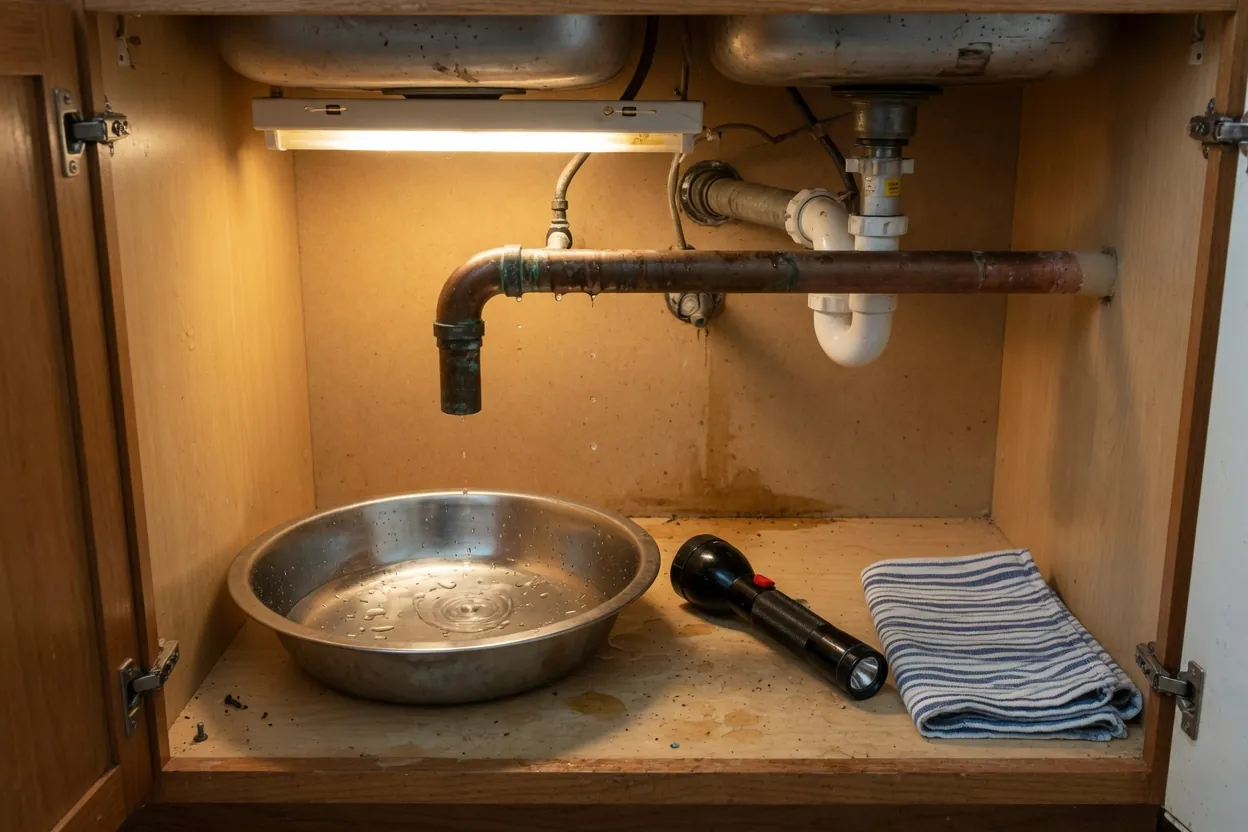
The rule that settles most of these arguments fits in one sentence: fix it yourself when the worst-case outcome is cosmetic and reversible, and call a professional when a mistake could hurt someone, flood something, burn something down, or void your insurance. That covers maybe 90 percent of the cases people agonize over. The hard part is figuring out which bucket a specific problem lands in.
Don't start with "Can I do this?" Start with "What happens if I get it wrong?" That question does most of the work.
The One Question That Beats a Pro/Con List
Most people run this decision backwards. They watch a tutorial, feel confident, and only wonder whether they should have called someone after the damage is done.
The first question is about reversibility. Mess up hanging a shelf and you patch a hole and move on. Mess up a gas line and there's no do-over. The BuildFolio decision framework lays this out well: weigh safety risk, permit requirements, skill match, time, reversibility, and cost of fixing mistakes, and hire a pro when you're unsure.
There's one filter people forget: insurance and permits. A lot of electrical, plumbing, and structural work legally requires a permit and inspection. Skip it and you're risking more than a bad repair. You may be jeopardizing a future insurance claim. The Zebra makes the same point: DIY the cosmetic stuff and hire out the complex jobs to protect your home, family, and insurance policy.
For a faster gut-check, our Fix It or Call a Pro decision tool walks you through these same questions in a minute or two, which helps when you're standing in the hardware aisle trying to decide.
Jobs You Can Almost Always DIY
Plenty of home repairs are beginner-friendly: low risk, cosmetic, easy to undo. Start here to build some confidence.
The "just do it" list:
- Painting a wall or room
- Patching small drywall holes (nail holes, doorknob dings)
- Replacing a faucet aerator or showerhead
- Swapping cabinet hardware, doorknobs, or switch plates
- Caulking a tub or sink
- Hanging shelves, curtains, and pictures
- Replacing HVAC air filters and cleaning vents
- Unclogging a slow drain with a plunger or drain snake
None of these can flood a room or shock you. The worst case is a crooked shelf or a paint drip. That's the DIY sweet spot.
Basic HVAC maintenance fits here too. Changing filters, clearing debris around the outdoor unit, checking your thermostat batteries. Happy Hiller lists these as safe homeowner tasks, while flagging that anything touching refrigerant or the compressor belongs to a pro. Learn where that line sits and you'll save real money on service calls.
The Red Lines: Call a Pro, No Exceptions
Some jobs aren't a judgment call. No matter how good the tutorial looked, they're a hard stop.
Call a licensed professional, every time, for:
- Electrical panel work, new circuits, or anything in the breaker box
- Gas lines and gas appliance connections
- Structural changes (removing walls, altering load-bearing anything)
- Roofing and major flashing repairs
- Sewer lines and main water lines
- Anything requiring a permit and inspection
The reasoning is simple. These mistakes don't stay small. A wiring error can start a fire weeks later. A gas mistake can be catastrophic. A load-bearing wall gives you no warning before it fails.
WonderHowTo states the governing rule about as clearly as anyone: if a mistake means cosmetic damage, do it yourself; if it touches the building envelope, a gas line, or requires a permit you're not ready to pull, call a pro.
The Sneaky Middle: Jobs That Look Easy But Aren't
This is where people get burned, literally and financially. These jobs feel like DIY, and YouTube makes them look like a 12-minute affair. They aren't.
Plumbing that goes past the trap
Swapping a faucet aerator is easy. Replacing a whole faucet or a garbage disposal is a maybe, depending on your comfort with shutoffs and connections. Anything behind the wall, or a leak you can't clearly trace, escalates fast. Water damage is expensive and sneaky. One bad seal you don't notice can rot a subfloor for months before you smell anything.
"Just one outlet"
Replacing a light fixture with the power off is doable for a careful DIYer. Adding an outlet, running new wire, or working on anything you're not certain is dead is a different job. If you can't confidently identify and kill the right circuit, stop. That's how "just one outlet" turns into a fire hazard.
Appliance repairs
Some appliance work is great DIY. A dishwasher that won't drain is often a clog you can clear yourself. But sealed systems like fridge compressors and anything with refrigerant, plus gas appliances, belong to a pro. Here's the frustrating pattern: people spend $60 on a part, three hours, and two trips to the store, then call a pro anyway. Which brings up the cost math.
Do the Cost Math (Including Your Time and Mistakes)
DIY is cheaper sometimes, not always, and the savings can disappear on you.
The honest cost of DIY isn't just the part. It's part, plus tools you don't own, plus your hours, plus the cost of fixing it if you get it wrong. A 2026 analysis from Masters Guild puts it bluntly: DIY savings evaporate the moment your fix becomes a repair bill.
A simple way to compare:
| Factor | Lean DIY | Lean Pro |
|---|---|---|
| Risk if wrong | Cosmetic, reversible | Injury, flooding, fire, code violation |
| Permit needed? | No | Yes |
| Special tools | Already own or cheap | Expensive or specialized |
| Your available time | Have a free afternoon | Time-crunched |
| Skill match | Done it before / can learn safely | New and high-stakes |
| Cost to fix a mistake | Low | High or dangerous |
If most of your answers land in the left column, grab your tools. If you're drifting right on even one safety row, that outweighs everything else. Safety isn't a factor you average out. It's a veto.
Don't forget the hybrid path. Sometimes you do the prep, like demo, painting, and cleanup, and hire the pro for the risky part. That's often where the real savings show up.
When It's Tech, Not Plumbing
Not every "should I fix this myself" question involves a wrench. A lot of home headaches now are the smart thermostat that won't connect, the router that keeps dropping, the doorbell camera that won't sync. The same framework applies: low risk, reversible, no permits. So most of these are safely DIY.
Usually you just need someone to talk you through it. That's what our step-by-step tech help tool does, walking you through the fix without the two-hour forum thread.
One line still holds: if the "tech" problem is actually your electrical panel or hardwired wiring, we're back in red-line territory. Software, apps, and plug-in gadgets are fair game. Wiring in the wall isn't.
The goal here isn't to talk you out of DIY. Saturday projects are half the fun of owning a place. The goal is that you never end up standing in a flooded kitchen at 11 p.m. wishing you'd made one phone call. Ask what happens if you're wrong, and let the answer decide.
Frequently Asked Questions
How do I know if a repair needs a permit?
Anything involving electrical circuits, gas, plumbing changes, or structural work usually requires a permit and inspection. Check with your local building department before you start. They'll tell you exactly what's required, and asking costs nothing. When a permit is involved, that's a strong signal to hire a licensed pro.
Is DIY always cheaper than hiring a professional?
No. The real cost of DIY includes tools you don't own, your time, and the cost of fixing a mistake. As Masters Guild notes, those savings disappear fast when a DIY job turns into a repair bill.
Can I replace a light fixture or outlet myself?
Swapping a light fixture with the power confidently shut off is doable for a careful DIYer. Adding new outlets, running wire, or any work where you can't verify the circuit is dead should go to a licensed electrician. The fire and shock risk isn't worth it.
What home repairs should I never DIY?
Never DIY electrical panel work, gas lines, structural changes, roofing, or main sewer and water lines. These mistakes can cause injury, fire, or major property damage, and many require permits. BuildFolio's framework puts all of these firmly in the "hire a pro" column.
What if I start a DIY job and get stuck halfway?
Stop before you make it worse. A half-finished job is often more expensive to fix than the original problem. If it's low-risk, our Fix It or Call a Pro tool can help you decide whether to keep going or call someone. If there's any safety concern, secure the area by shutting off water, power, or gas, and get a professional.