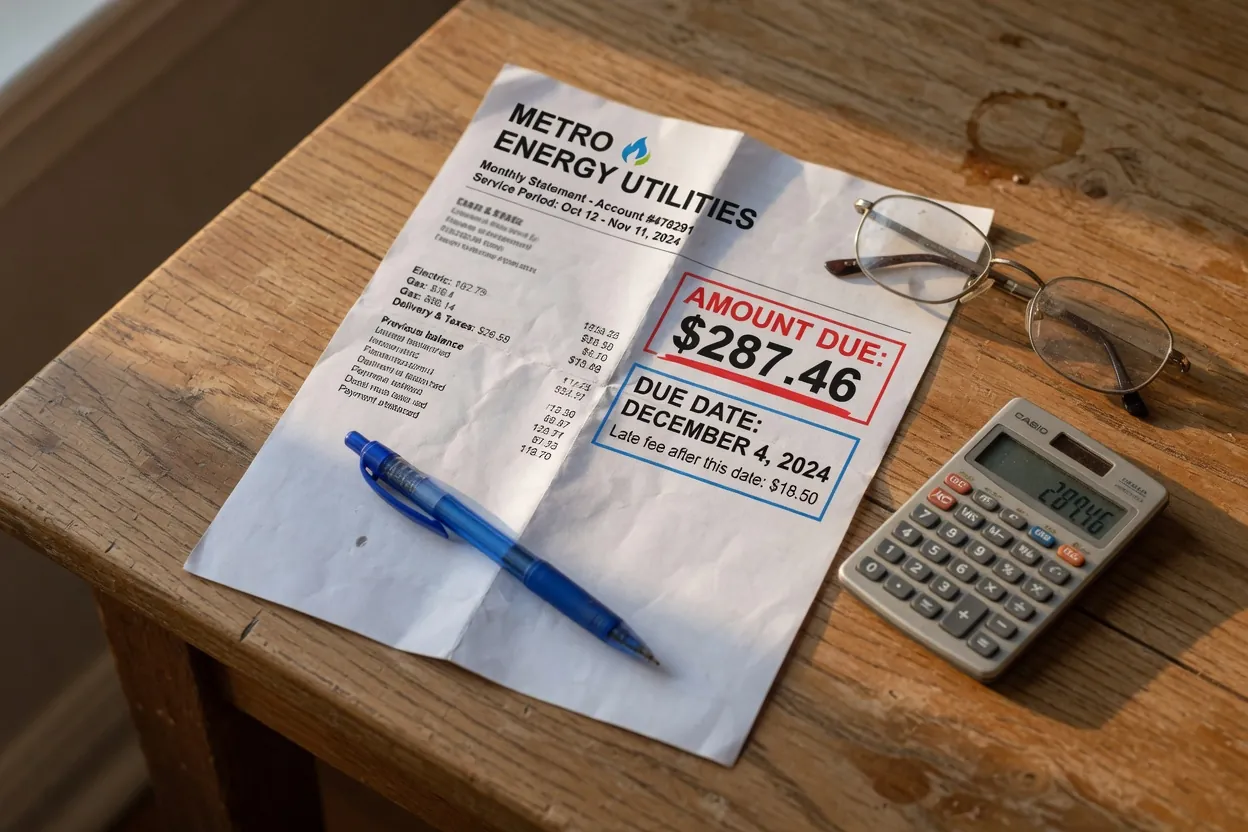
The fastest way to lower your monthly bills: call the company, ask for the retention department, mention a competitor's price, and stay polite but firm. Most people never do it because they assume the number on the bill is final. It isn't. The first price is an opening offer.
This guide walks through what to say, department by department, with scripts you can read word-for-word off your phone screen. No aggression required. Five minutes and a little market data will do it.
Why Your Bills Keep Creeping Up (And Why That's Good News)
Most people don't overspend because they're careless. They overspend because expenses climb quietly. An internet promo expires. Insurance renews at a higher rate. A subscription nobody remembers keeps charging.
These companies bank on you not noticing. Internet providers are the worst offenders, raising rates the moment your introductory period ends. But you have more transparency now than you used to: the FCC requires broadband consumer labels that clearly display prices and fees, which gives you a paper trail to challenge unexpected hikes, according to Money Talks News.
The savings aren't trivial either. Broadview Federal Credit Union estimates that many households can cut 15% to 20% from monthly budgets by addressing recurring payments and daily spending. On a $3,000 monthly budget, that's $450 to $600 back in your pocket every month.
The Retention-Department Trick (This Is the Whole Game)
If you take one thing from this article, take this: don't negotiate with general customer service. Ask for the retention or "customer loyalty" department instead.
Retention agents have access to unpublished deals that regular reps can't touch. Their entire job is to stop you from canceling. AskMyFinance makes the same point — call the retention department, not general customer service, and tell them you're considering switching. Carriers keep loyalty discounts in reserve and only reveal them when you push back.
This opener gets you transferred:
"Hi, I'm thinking about canceling my service. Can you connect me with your retention or loyalty department?"
That routes you to someone with the authority to cut your rate. From there it's just knowing what to say.
Word-for-Word Scripts That Actually Work
Have your latest bill and account number in front of you. Take notes during the call: the rep's name, the time, and the specific offer. You'll need those notes if the discount doesn't show up on next month's bill, and a surprising number don't apply automatically.
How to Lower Your Internet or Cable Bill
The classic negotiation. Search for what new customers pay and what a competitor charges, then dial in. This script comes straight from Money Talks News:
"I've been a loyal customer for years, but I've noticed my bill has increased to $85, while new customers are getting this same speed for $50. I've also seen that your competitor is offering a similar plan for $45. I'd prefer to stay with you to avoid the hassle of switching, but I need a better rate to make that happen. What loyalty discounts can you apply to my account today?"
Swap in your real numbers. The specifics are what work — they prove you did your homework.
How to Negotiate Your Cell Phone Bill
Same principle, different angle. Lean on loyalty and a competitor's offer:
"I've been reviewing my budget, and I've found [competitor] is offering a comparable plan for less. I'd like to stay, but I need you to match or beat that rate. What can you do for me today?"
If the first rep says no, don't take it at face value. Payactiv's advice is blunt and correct: don't accept the first offer, and be prepared to walk. Sometimes the willingness to leave is your only real leverage.
How to Lower Your Insurance Premium
Insurance is a big one, and often the easiest to win. Rates have climbed across the board, so if you haven't shopped in a couple of years, you're almost certainly overpaying. Get quotes from at least three competitors, then call your current provider:
"I've gotten quotes from a few other companies for the same coverage, and they're coming in lower. Before I switch, I wanted to give you a chance. Can you review my policy for any discounts — bundling, safe driver, or loyalty — that would bring my premium down?"
While you're on the phone, ask about raising your deductible or enrolling in autopay and paperless billing. Small levers, but they stack.
Realistic Savings: What to Actually Expect
Not every call ends in a jackpot. But the odds favor you.
In a 2025 LendingTree survey, 83% of cardholders who asked for a lower interest rate got one, with an average cut of 6.5 percentage points, per The Money Raccoon. The most common reason people never ask is that they didn't know they could.
A realistic breakdown of where to spend your energy:
| Bill Type | Effort | Where to Call | Best Leverage |
|---|---|---|---|
| Internet/Cable | Low | Retention dept | Competitor pricing + new-customer rates |
| Cell phone | Low | Retention dept | Competitor plan match |
| Car insurance | Medium | Your agent | Quotes from 3+ competitors |
| Subscriptions | Very low | Cancel flow | Just threaten to cancel |
| Credit card APR | Very low | Cardholder line | On-time payment history |
Automatic payments and paperless billing feel like rounding errors, but BluPeak points out that across multiple bills, those savings can add up to hundreds of dollars a year. Stack the small wins with the big ones.
Don't Forget the Subscriptions You Forgot About
You swear you canceled that free trial. Maybe you did. Free trials are easy to sign up for and easier to forget, and streaming services will quietly charge your card month after month until you notice.
One rule that never fails: download three months of bank statements and read every line. Not the balance — every line. You'll find at least one zombie charge. Cancel what you don't use, then ask for a better rate on the ones you keep. A lot of providers will offer a discount the second you head for the exit.
Need help drafting the exact wording for any of these calls? Our bill negotiator tool builds a custom script from your account details. And if you want to see how much inflation has quietly eaten into your budget over the years — often the real reason bills feel heavier — the inflation calculator will show you in about thirty seconds.
A Few Ground Rules Before You Dial
Keep this checklist in your back pocket:
- Be polite but firm. Reps help pleasant people. This isn't a fight.
- Time it right. Mid-morning or early afternoon on weekdays, when reps have more room to work.
- Document everything. Name, date, offer details, promised changes.
- Never take the first offer. There's usually a second, better one.
- Be ready to walk. Your best leverage is a real willingness to leave.
- Set a reminder to negotiate again in 6–12 months. Discounts expire, and so does your bill's low price.
That last step is the one everybody skips. Put it on your calendar now, while you're thinking about it.
Make one call today. Pick the bill that annoys you most, ask for the retention department, and read the script. Worst case, they say no and you're exactly where you started. Best case, you just gave yourself a raise.
Frequently Asked Questions
Does asking for the retention department really work?
Yes. Retention agents have access to loyalty and promotional discounts that general customer service reps can't offer, because their job is to keep you from canceling. Ask to be transferred there before you start negotiating.
How often should I renegotiate my bills?
Every 6 to 12 months. Discounts and promotional rates expire, and companies quietly raise prices when they do, so set a calendar reminder to check in before your bill climbs back up.
What if the representative says no?
Don't accept the first "no." Politely ask to speak with a supervisor or the retention department, or say you're prepared to cancel. A real willingness to walk is often the leverage that unlocks a better offer.
Which bills are actually negotiable?
Most recurring bills, including internet, cable, cell phone, car and home insurance, credit card interest rates, subscriptions, and even medical bills. The first price is almost always an opening offer, not a final one.
Do I need a competitor's price to negotiate?
It helps a lot. Having a specific competitor's rate or a new-customer price in hand shows you've done your research and gives the rep a concrete number to beat.