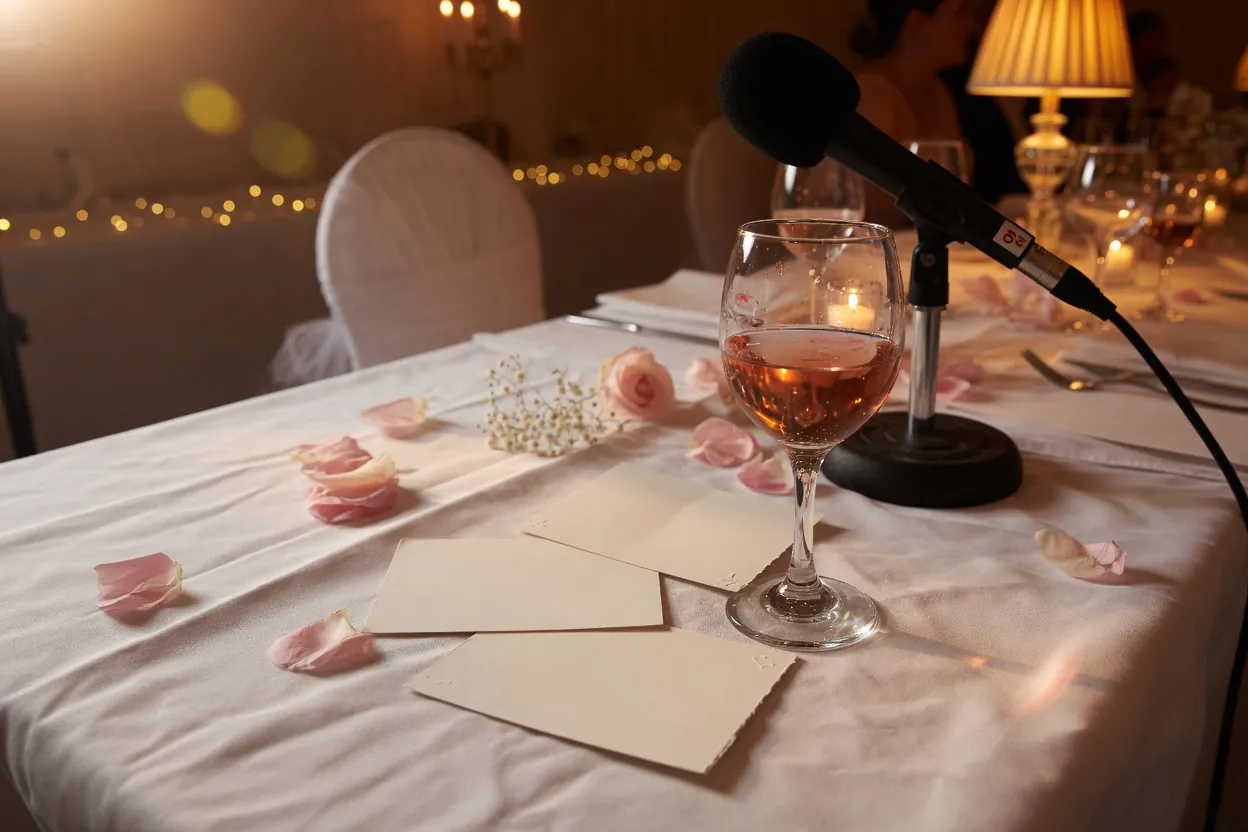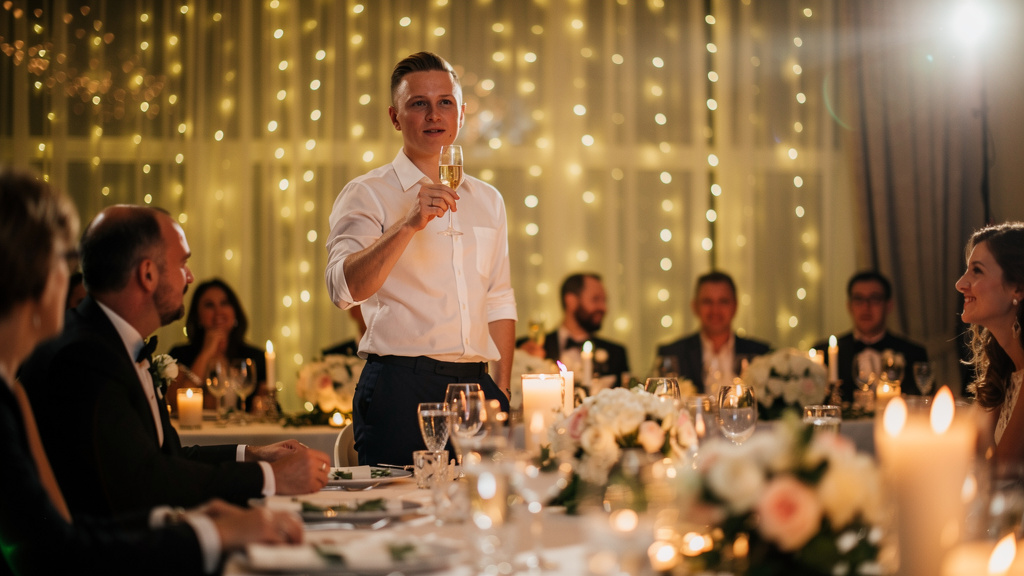
You've been asked to give a wedding toast — and now you're spiraling. The pressure is understandable. You love this person and want to do them justice, but every time you sit down to write, your mind goes blank or you end up with three pages of stories that never quite get to the point.
Here's the truth: knowing how to write a wedding toast isn't about being a great writer or a natural performer. It's about following a simple structure, being genuinely yourself, and caring more about the couple than about impressing the room. Do those three things and you'll give a toast people actually remember — for all the right reasons.
This guide walks you through every step, from your very first sentence to the moment you raise that glass.
What You'll Need
- A quiet hour to think and write (seriously, just one hour to start)
- A few specific memories about the person or couple you're toasting
- A phone or laptop to draft and save your speech
- Optionally: an AI writing tool like EasyAI's Speech Writer to help you get unstuck on a first draft
Estimated Time: 2–4 hours total (spread across a few sessions) Difficulty Level: Beginner-friendly — no writing experience required
Step 1: Understand What a Wedding Toast Actually Is
Before you write a single word, let's clear something up. A wedding toast is not a roast. It's not a standup set. It's not your chance to finally tell that story from Vegas.
A wedding toast is a short, personal tribute that gives guests a window into who this person is — and why this marriage makes sense. According to Toastmasters International, the best toasts stay on topic, get personal, and use humor carefully. The goal is to make the couple feel seen and celebrated, while giving the room something to smile (or cry) about.
That's it. You're not trying to win anything. You're just trying to honor someone you love.
Step 2: Nail the Right Length
Here's where most people go wrong. They think longer means more heartfelt. It doesn't.
Aim for 2–3 minutes. That's roughly 300–400 words spoken aloud. Some guides suggest up to 5 minutes, but 2–3 minutes is the sweet spot — long enough to say something meaningful, short enough that people are still listening when you finish. Brides magazine says it plainly: "Your wedding toast should be meaningful but not drawn out."
A quick way to check: read your draft aloud and time it. Speaking pace at a wedding — with pauses, emotion, and a few laughs — runs around 120–130 words per minute. So 350 words is about 2.5 minutes. Perfect.
Step 3: Follow the Four-Part Structure
This is the framework. Use it. Every great wedding toast — whether it's a best man speech or a maid of honor toast — follows some version of this:
Part 1: The opening hook (15–20 seconds)
Don't start with "Hi, I'm [name] and I've known [person] for X years." That's a snooze. Start with something that pulls people in — a short, surprising line, a funny observation, or a one-sentence story.
Example: "The first time I met Jamie, she was crying in a Walgreens parking lot over a broken umbrella. I knew immediately we were going to be best friends."
Then introduce yourself in one sentence. Keep it brief — most guests will figure out who you are.
Part 2: The story (60–90 seconds)
This is the heart of your toast. Pick one story. Not three. Not a highlight reel. One specific, vivid memory that reveals something true about the person you're toasting.
As Medium's Forge puts it, the golden rule is "show, don't tell." Don't say "Sarah is the most loyal person I know." Tell the story about the time she drove four hours in a snowstorm to help you move. That's loyalty. The room will feel it.
Part 3: The pivot to the couple (30–45 seconds)
Connect your story to their relationship. This is where you bring in the partner — warmly, specifically. What do you love about them together? What does this person bring out in your friend that you've never seen before?
Zola's expert guide notes that the best toasts make both people feel celebrated, not just the one you know best.
Part 4: Raise the glass (15–20 seconds)
End with a clear, warm closing line and an invitation to drink. Don't trail off. Don't add "one more thing." Land the plane.
Example: "To Alex and Jamie — may your love be as strong as your Wi-Fi and your patience for each other as long as your Netflix queue. Please raise your glasses."
Step 4: Write a Messy First Draft (Then Fix It)
Don't try to write a perfect toast on the first pass. Just dump everything out. Write the story the way you'd tell it to a friend. Write the pivot even if it's clunky. Write a closing line even if it's cheesy.
Then read it aloud. Out loud — not in your head. You'll immediately hear what's too long, what sounds weird, and what actually lands.
If you're stuck on getting started, this is where an AI tool helps. EasyAI's Speech Writer can generate a solid first draft based on a few details — your relationship to the couple, a memory or two, the tone you're going for. Think of it as a wedding speech generator that hands you raw material to shape, not a finished product to read verbatim. Your voice and your specific details are what make it real.
You can also use EasyAI's Ask AI tool to brainstorm story angles, test whether a joke lands, or get feedback on a draft you've already written.
Step 5: Cut the Things That Don't Work
Let's talk about what to leave out — because this is where toasts go sideways.
Inside jokes nobody gets. You know the ones. The reference that makes you and two other people crack up while 150 guests stare blankly. A little is fine; a lot is alienating.
Embarrassing stories. There's a difference between lovingly teasing someone and humiliating them in front of their grandmother and new in-laws. If you're not sure which side of the line you're on, you're probably on the wrong side. WeddingChicks is right that humor should never cause the guest of honor embarrassment.
Ex mentions. Just... no.
Going too long. Keep it to 2–3 minutes. Set a timer.
Drinking before you speak. One drink to take the edge off is human. Four drinks before you grab the mic is a disaster waiting to happen. Wedding coaches and planners are pretty unanimous: don't drink too much beforehand.
Step 6: Practice Until It Feels Natural
Read your toast aloud at least five times before the wedding. In front of a mirror. To your partner or a friend. Record yourself on your phone and watch it back (yes, it's uncomfortable — do it anyway).
You don't need to memorize it word for word. But you should know it well enough that you're speaking it, not reading it. Eye contact matters. Pauses matter. Smiling at the couple when you mention them matters.
Print your toast in a large, readable font — 16pt minimum — so you're not squinting at your phone in dim reception lighting.
Common Issues and How to Fix Them
"I can't think of a good story." Start smaller. What's a moment — even a tiny one — that shows who this person is? The way they always order for everyone at a restaurant. The text they sent you when you were going through something hard. Small moments make the best stories.
"My draft is way too long." Read it aloud and mark every sentence that isn't doing work. If a line doesn't add to the story, build to the pivot, or land a laugh — cut it. Be ruthless.
"I'm terrified of public speaking." Practice more. And remind yourself: this room is full of people who want you to succeed. They're rooting for you. They love the couple too.
"I don't know how to connect my story to the partner I don't know as well." Ask the person you do know. "What's something [partner's name] does that makes you feel loved?" One real answer from them is worth more than anything you could invent.
What's Next
Once your toast is written and practiced, a few final things:
- Confirm the logistics with the wedding coordinator or couple — when you speak, where you'll stand, whether there's a microphone
- Save your toast in multiple places — email it to yourself, have a printed copy, keep it on your phone
- Send a thank-you note after the wedding — the couple will remember that you showed up for them, in every sense. (If you want help writing that note, EasyAI's Reply Helper makes it easy.)
And honestly? Once you've given the toast, you'll wonder why you were so scared. The room is always warmer than you expect. The couple is always more grateful than you imagine. Just say something true, say it from the heart, and raise the glass.
That's enough. It really is.
FAQ
How long should a wedding toast be?
Aim for 2–3 minutes, which is roughly 300–400 words spoken aloud. Long enough to tell a meaningful story, short enough to keep the room with you. Push past 5 minutes and you're losing people no matter how good the content is.
What's the best structure for a best man speech or maid of honor toast?
Use a four-part structure: an opening hook, one personal story, a pivot to the couple, and a clear closing toast. It works for best man speeches, maid of honor toasts, and parent speeches alike — keeps you focused and gives the audience something that actually feels like it builds to something.
Can I use AI to write my wedding toast?
Yes — tools like EasyAI's Speech Writer are genuinely useful for breaking through writer's block or getting a first draft on the page. Just make sure you go back in and make it yours. A toast that sounds like it was written by a robot won't move anyone.
What should I absolutely avoid in a wedding toast?
Inside jokes only two people understand, embarrassing or inappropriate stories, any mention of exes, and going too long. And don't drink heavily before you speak — nerves plus alcohol rarely ends well at a microphone.
Should I memorize my wedding toast or read it?
Neither extreme works well. Know it well enough to speak naturally and make eye contact, but keep a printed copy in hand as a safety net. Reading word-for-word feels stiff; trying to memorize every line creates pressure you don't need.
When should I start writing my wedding toast?
At least two to three weeks out. That gives you time to write a messy first draft, let it sit, revise it, and practice enough to feel like yourself when you're up there. Waiting until the night before almost always shows.